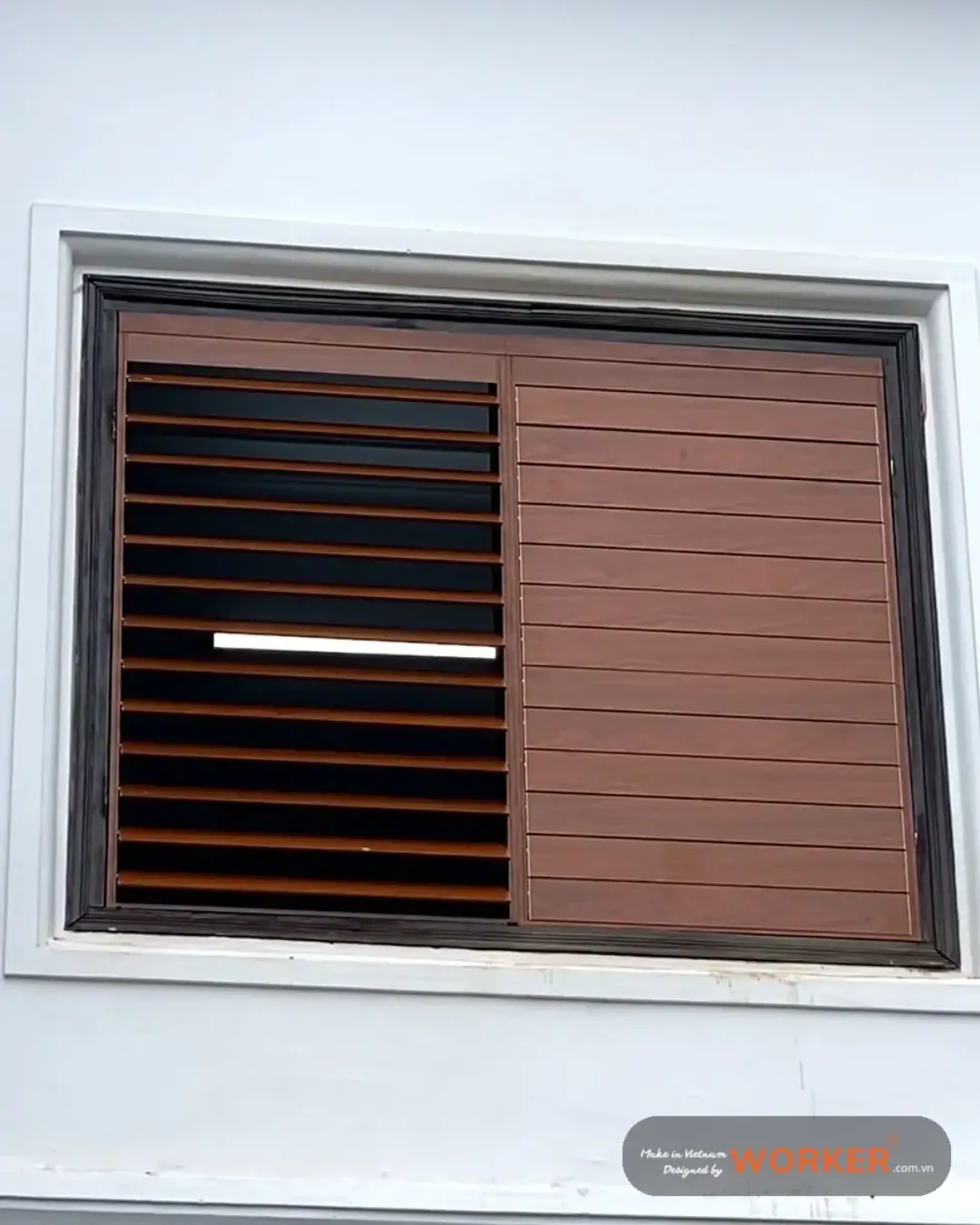
Aluminium louvres and glass windows do not replace each other; they solve two different problems. Glass handles enclosure and views (blocking noise and dust, keeping an uninterrupted view); aluminium louvres handle sun, air and privacy (shading before the sun reaches the glass, letting air through the blade gaps, blocking views from outside). Where an opening must be sealed, use glass; where it must breathe, use louvres; and for most living spaces in a hot climate with driving rain, combining both works best, most commonly with glass inside and louvres outside.
This article compares the two criterion by criterion, explains why shading outside the glass works better than blinds inside, sets out 5 ways to combine louvres with glass, gives suggestions by location and shows how to compare costs fairly.
Aluminium louvres vs glass, criterion by criterion
| Criterion | Aluminium louvre (operable) | Glass window |
|---|---|---|
| Air when closed | Yes, through the gaps; less when blades are closed | None |
| Direct sun | Blades stop it before it enters the room | Passes through, needs blinds or reflective glass |
| Heat | 80% heat insulation when closed, shading from outside | Sun through glass becomes heat inside |
| Light | Soft, adjustable with the blade angle | Direct, can glare |
| Privacy | Inclined blades block views from outside | Needs blinds or obscured glass |
| Driving rain | Closed blades block 95–98% of driving rain | Closed glass keeps it out |
| Noise, dust | Gaps, so not blocked like glass | Well blocked when closed |
| View out | Divided by the blades | Uninterrupted |
| Security | Optional reinforced stainless steel anti-theft pivot core | Depends on glass and locks |
| Maintenance | Clean blade faces and gaps | Clean glass, check seals |
Neither wins on every criterion. So the right question is not "louvres or glass" but "what does this opening have to do", and then choose one or combine both.
Why shading outside the glass works better than blinds inside
When the sun passes through glass and meets an inside blind, the light is blocked but the heat is already in the room; the blind and the space between blind and glass heat up. A louvre outside stops the sun before it reaches the glass, so most of the heat stays outside. That is why west-facing elevations and large glazed areas often use external louvres instead of internal blinds, or both: the louvre outside for heat, the blind inside for darkness when needed. See also west-facing solar shading.
Glass louvre windows vs aluminium louvres
People researching this also come across glass louvre windows, with rotating glass blades. These are different from aluminium louvres, and different from combining aluminium louvres with a glass window as described here:
| Criterion | Glass louvre window | Aluminium louvre |
|---|---|---|
| With blades closed | Still bright, see-through | Shaded, view blocked |
| Sun and heat | Sun still passes through the glass blades | Aluminium blades stop the sun; 80% heat insulation when closed (WORKER operable blades) |
| Privacy | Needs obscured glass or blinds | Built in, thanks to inclined blades |
| Suits | Openings needing maximum daylight with little harsh sun | Sun-facing elevations, privacy, ventilation |
WORKER makes aluminium-blade louvres (operable and fixed). Where an opening needs both maximum daylight and shade, the usual solution is fixed or opening glass above with aluminium louvres below, or glass inside and louvres outside.
Townhouse façades: combining glass and louvres
A townhouse façade usually has three kinds of opening: the ground-floor door, balcony doors on each floor and room windows. An arrangement that is easy to build and consistent:
- Ground floor: a glazed door with a louvre panel in the middle, or sliding louvre shutters outside, for daylight with privacy from the street.
- Balconies: glass balustrade, with a louvre box or operable louvre screen outside to close against afternoon sun.
- Room windows: glass inside, louvres outside, in the same system and colour as the balconies.
- Double-height and stairwell openings: Worker-Fixed fixed-blade louvres.
Keep the same louvre colour and blade direction across the façade, with transoms aligned between floors.
When to choose aluminium louvres
- Openings that must stay ventilated when nobody is home: bathrooms, storerooms, altar rooms, stairwells, lightwells, mezzanines.
- West-facing and harsh-sun elevations: shading from outside reduces heat in the rooms behind.
- Close neighbours, privacy needed with daylight: the most common townhouse situation.
- Balconies, loggias and corridors exposed to rain: close the blades in rain, open them in mild sun.
- Screening plant areas and air-conditioner condensers: ventilation for the equipment with a tidy elevation.
When to choose glass
- Air-conditioned rooms that must be sealed, studies that must be quiet.
- Rooms on busy roads, near markets or building sites: noise and dust come first.
- Openings facing a fine view that needs an uninterrupted frame.
- Spaces that must be fully sealed, such as equipment rooms or storage that must stay dry.
Most of these can still take an external louvre to handle the sun without losing the enclosure of the glass.
5 ways to combine aluminium louvres with glass
1. Glass inside, louvres outside
The glazed door or window sits inside and the operable louvre outside. Close the glass in storms or for quiet; on sunny days partly close the louvre to stop the sun before it reaches the glass; at night open the glass and the blades for air. This is the familiar arrangement for bedrooms, west-facing living rooms and loggias.
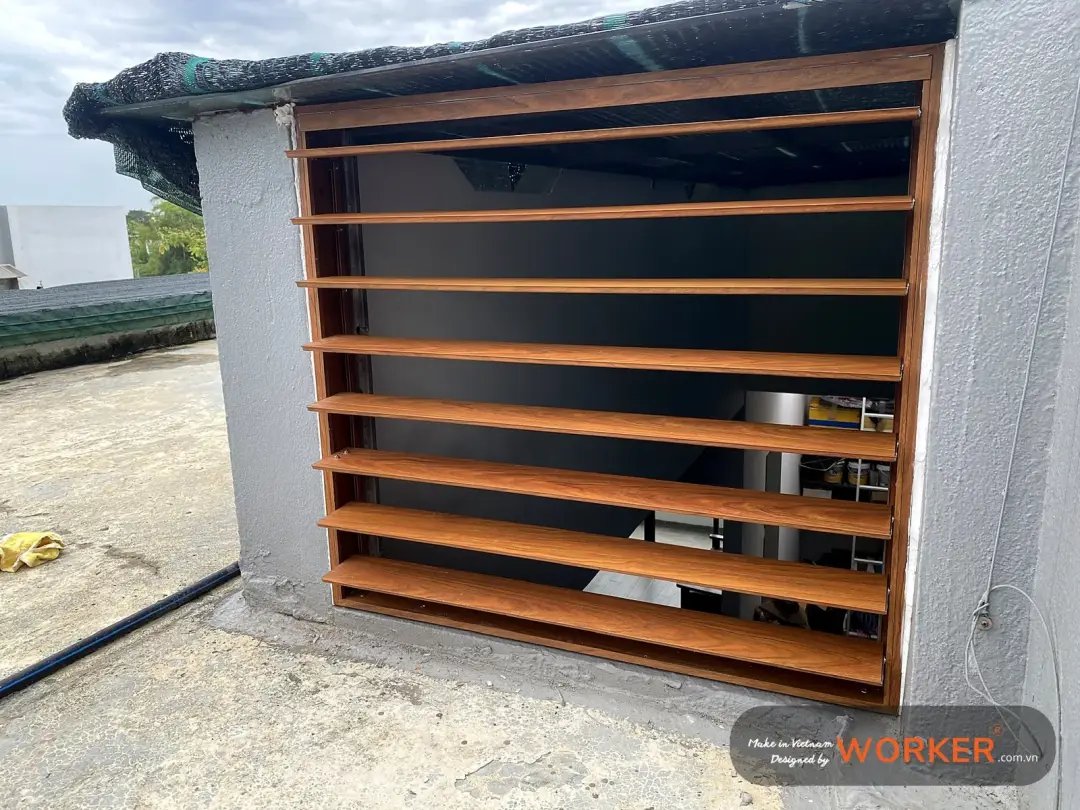
Woodgrain louvres screening air-conditioner units.
Balconies with glass balustrades can take a full louvre box around the outside: the glass balustrade provides safety and a view when the blades are open, the louvre box handles afternoon sun and privacy for the room behind.
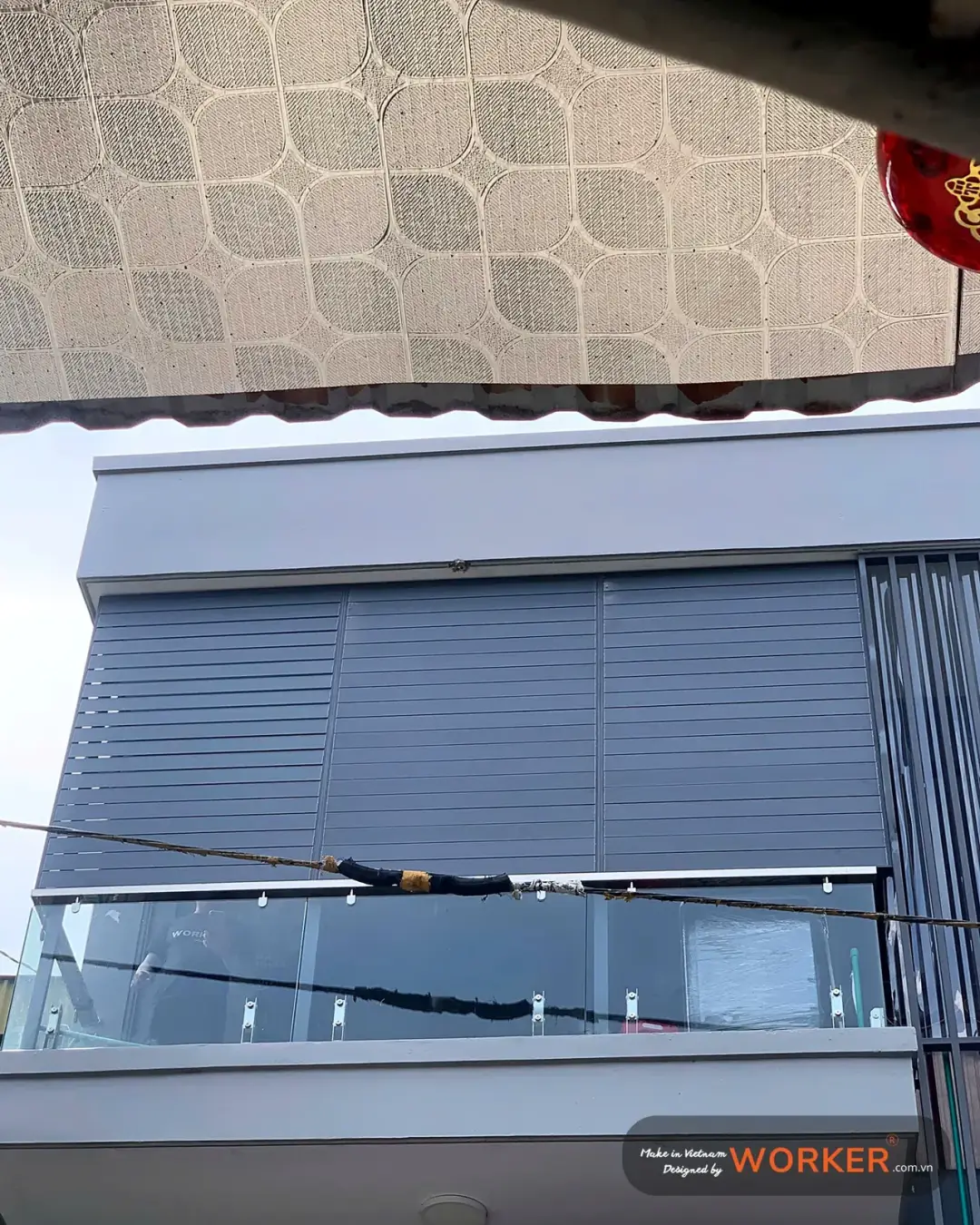
Grey aluminium louvre box around a balcony with a glass balustrade. See the project page.
2. Louvre panel in the middle of a glazed door
The glazed door is divided into three: glass above, louvres in the middle, glass below. The louvre at eye level handles privacy and air, the glass above brings light, the glass below keeps the door rigid and easy to clean. It suits doors to yards and ground-floor townhouse doors.
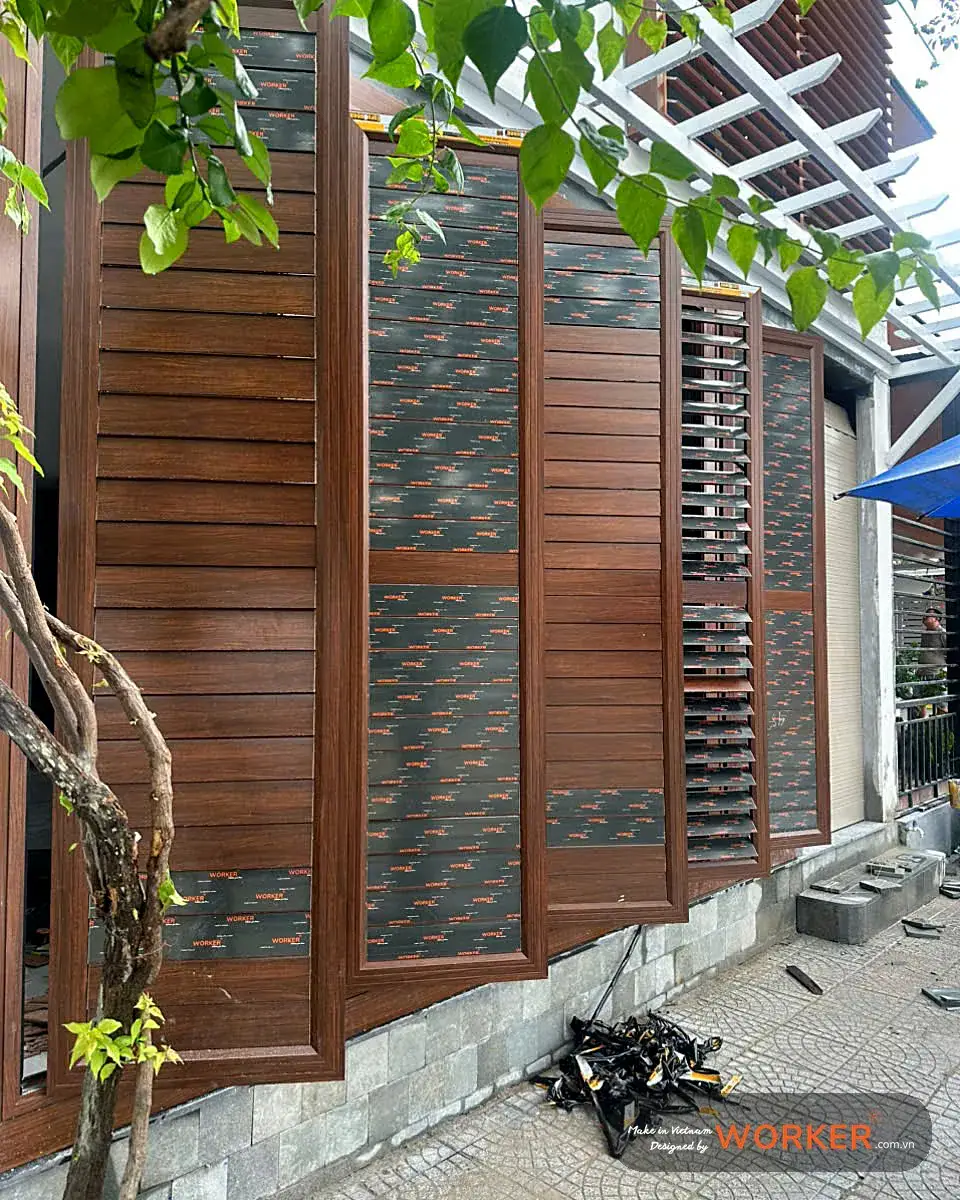
Four woodgrain louvre leaves swung open on a porch.
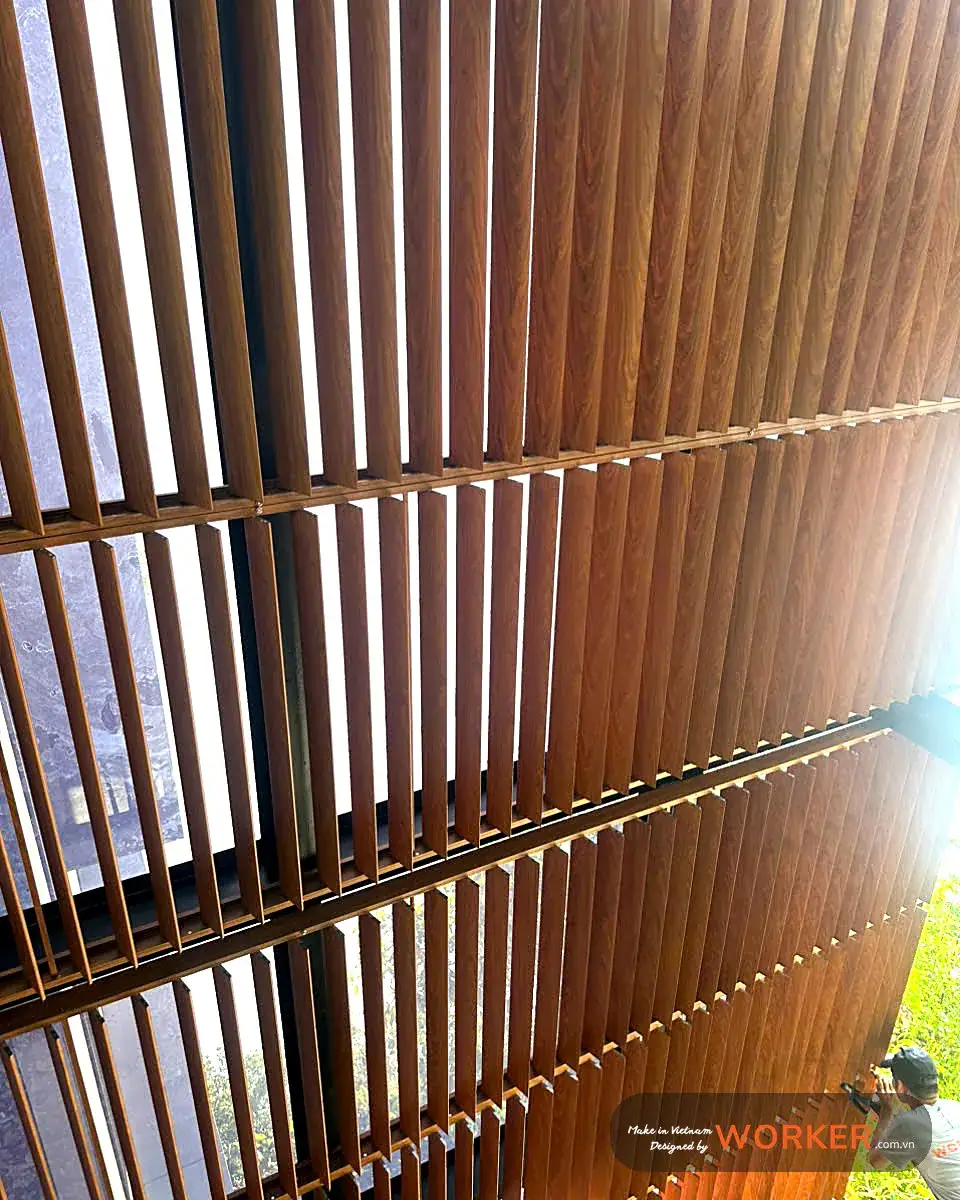
Woodgrain louvre ceiling under a glass roof.
3. Glass above, louvres below
The window is split in two: fixed glass above for daylight, louvres below for air and privacy from the street. The transom can line up with the adjacent door for a tidy elevation. Other window types are covered in aluminium louvre windows: 7 types, sizes and prices.
4. Glass for the main opening, louvres for secondary openings
The main opening facing a view is glazed; the side openings, balconies and stairwell openings use louvres for sun and air. Townhouse façades often do this: glass balustrades and balcony doors, with fixed or operable louvre screens beside them.
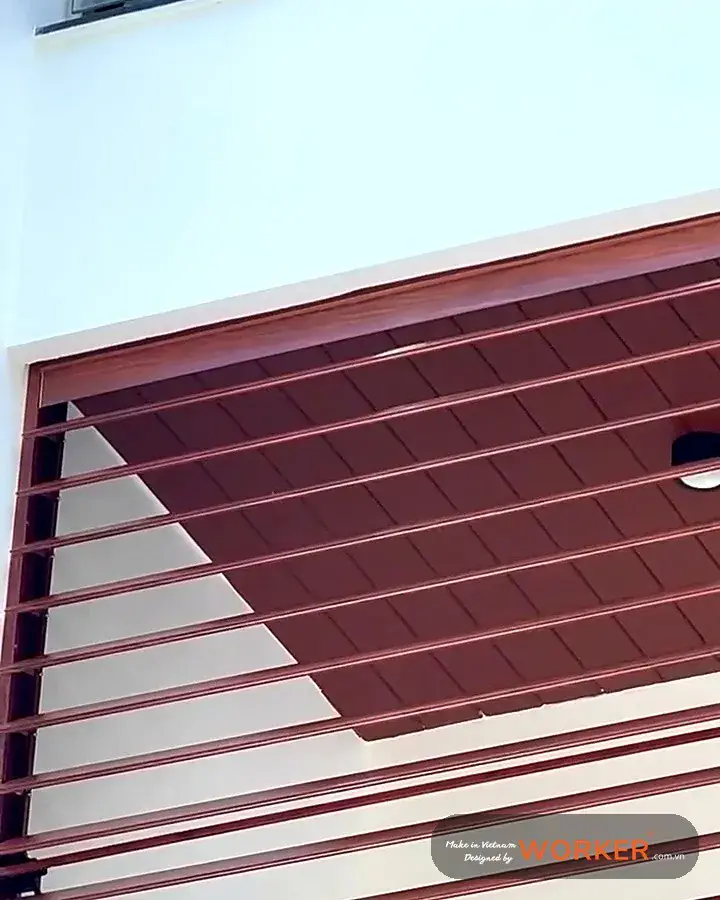
Red woodgrain balcony louvres seen from below.
5. Louvres fitted onto an existing aluminium-glass door or window
Where the house already has aluminium-glass doors and windows and only needs a louvre layer, use Worker-Smart: a 30 × 19 × 1 mm frame that fits onto the existing aluminium-glass system, with a concealed mechanism for a flat, neat face. At 1,890,000 VND/m² it has the lowest unit price among the operable systems and suits refurbishment without removing the old frame.
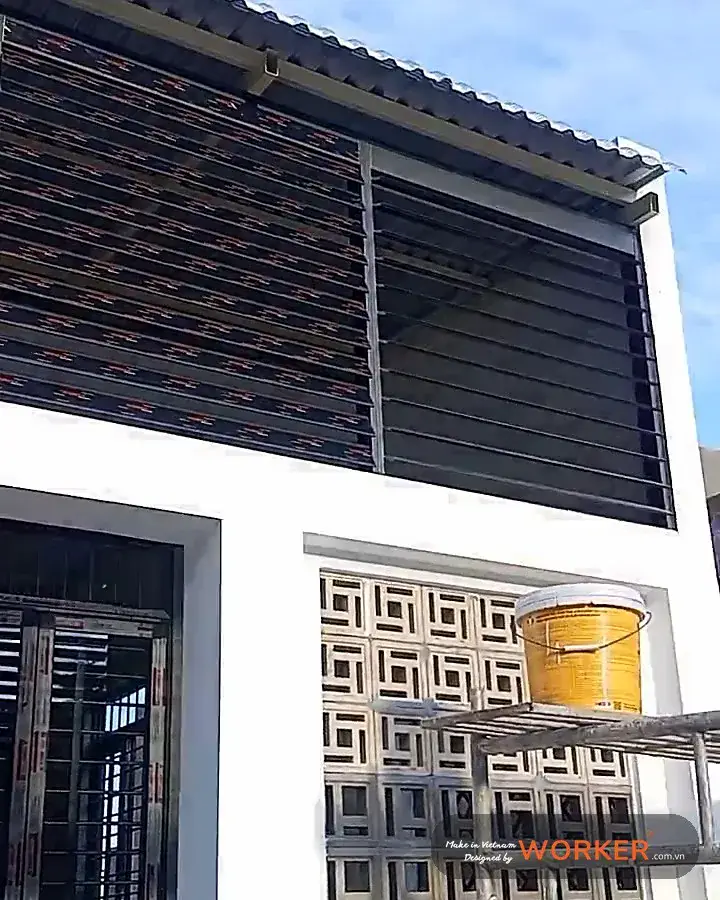
Townhouse with balcony louvres and glass doors.
Choosing by location in the house
| Location | Suggestion | Notes |
|---|---|---|
| Bedroom | Glass inside, operable louvre outside | Glass is essential on busy streets; add screens and blinds as needed |
| Living room | Glass for the main opening, louvres for secondary or west-facing openings | Wide openings in Worker-Max, seamless up to 3.5 m |
| Kitchen | At least one louvre opening for air | Lets heat and smells escape |
| Bathroom | Louvres (fixed or operable) | Worker-Fixed for vents; Worker-Pro where it must close |
| Stairwell, lightwell | Louvres | Fixed blades or a motor for high openings |
| Balcony, loggia | Glass balustrade/door + louvres outside | Close the blades against afternoon sun and driving rain |
| Plant area, condensers | Louvres | Ventilation for the equipment, a tidy elevation |
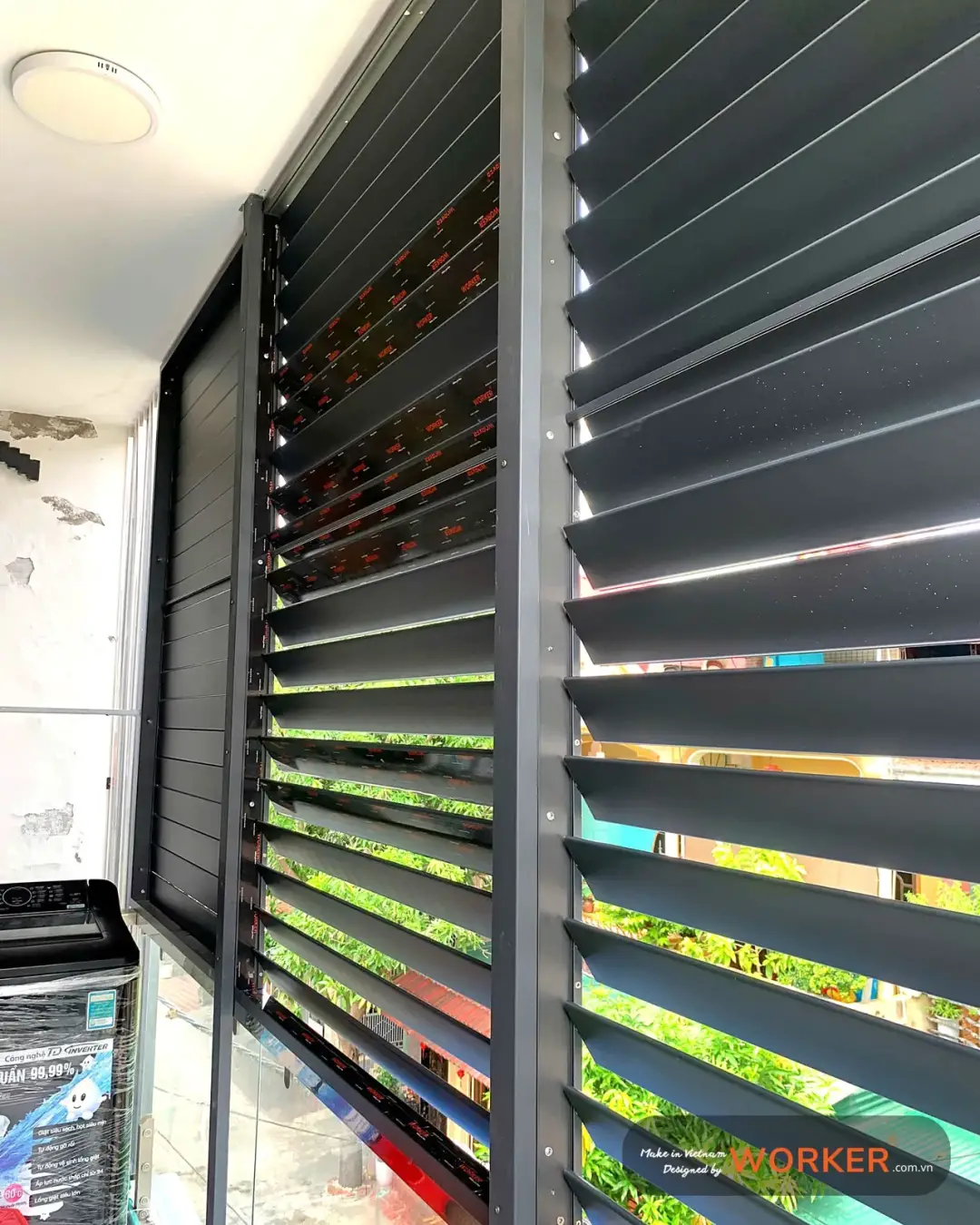
Metallic stone grey operable louvre screen seen at an angle, blades open. See the project page.
Costs: comparing fairly
Comparing louvres with glass is only fair when the extras are included:
- Glass windows usually need blinds as well for privacy and shade; glass prices depend on the supplier, so get a specific quotation.
- WORKER louvres are priced per m² by system: Worker-Max 2,590,000 VND, Worker-Pro 2,390,000 VND, Worker-Smart 1,890,000 VND, Worker-Fixed 1,990,000 VND; openings under 0.9 m² are charged per set, from 0.9 to under 1 m² as 1 m². Prices exclude VAT, delivery and installation.
- Two layers cost both, but each layer does its own job and shading blinds are often unnecessary.
Example for a 1,200 × 1,400 mm window (1.680 m²): a Worker-Pro louvre is 4,015,000 VND; if an aluminium-glass window already exists and only Worker-Smart is added, 3,175,000 VND. Supply and install (delivery and installation included, VAT excluded): Worker-Pro 2,700,000 VND/m², Worker-Smart 2,200,000 VND/m². Both ways to buy are explained in louvre installation cost.
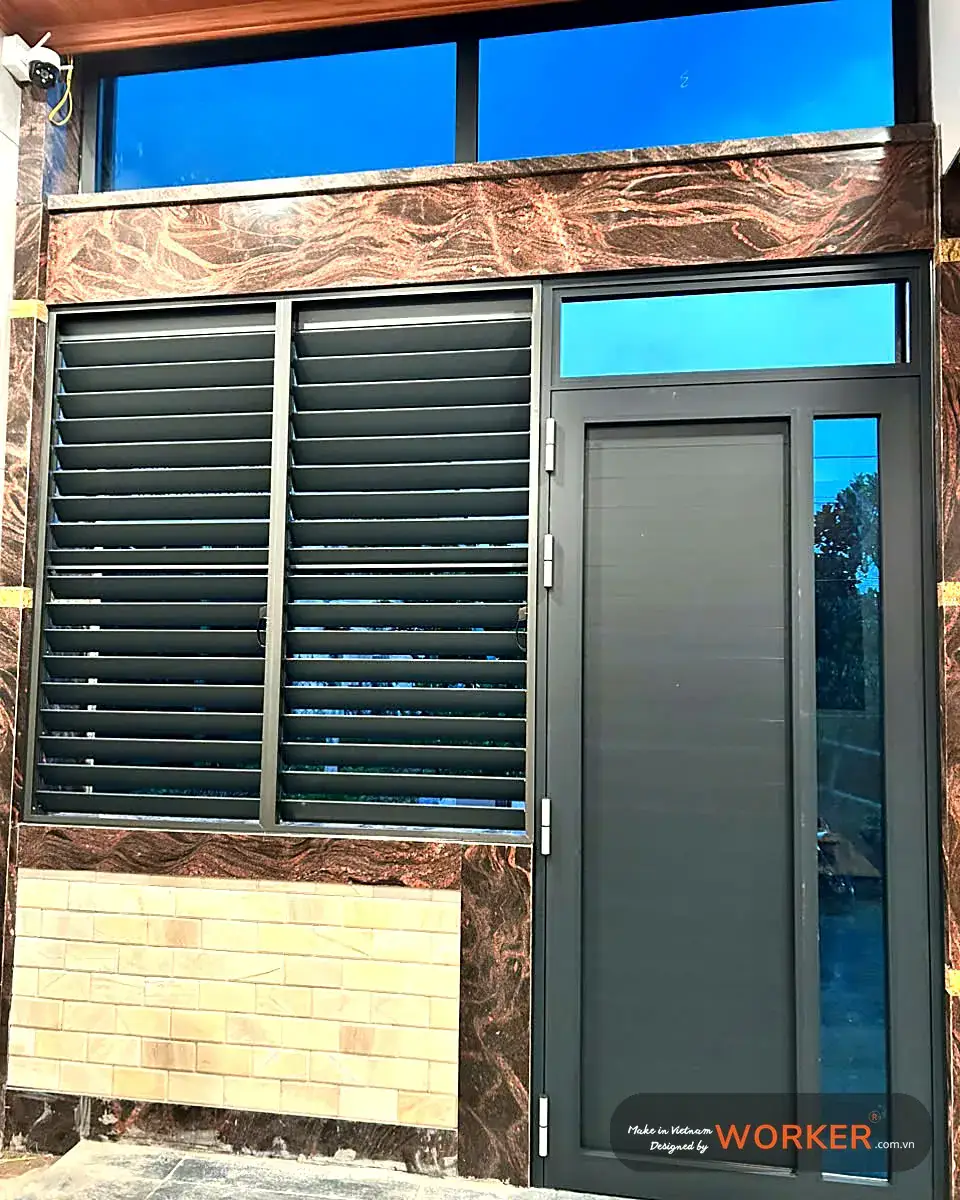
Grey aluminium louvre window beside a glazed door with a fanlight, on a stone-clad façade. See the project page.
Common mistakes when combining louvres and glass
- Louvres inside the glass on a west elevation: the heat is already in the room before it is stopped; put the louvre outside.
- No room to operate: the gap between the glass and the louvre must allow the glass sash to open and the louvre lever to be used; decide the sash type (sliding or hinged) before fixing the louvre position.
- No drainage between the layers: rain that passes the blades needs a way out, not a pool on the sill between the layers.
- Mismatched frame and louvre colours: choose the louvre colour (wood grain or metallic stone grey) together with the glazing frame colour for a consistent elevation.
- Measuring the louvre from the wall opening after the glass is installed: re-measure the actual clear size once the glazing frame is in, to avoid size errors.
Frequently asked questions
Can aluminium louvres replace glass windows?
For vents, bathrooms, stairwells, balconies and plant areas, louvres can be used on their own. Rooms that need to be sealed, quiet or keep a view still need glass; then add an external louvre for the sun.
Do I still need louvres if I have glass?
If the glass takes harsh sun, needs privacy or should stay ventilated when nobody is home, yes. External louvres stop the sun before it reaches the glass and are more effective than internal blinds for heat.
Can louvres be fitted onto an existing aluminium-glass window?
Yes, with Worker-Smart fitted onto the aluminium-glass system, at 1,890,000 VND/m². Send photos and dimensions so the technical team can confirm the fixing.
Can an air-conditioned room use a single louvre layer?
In many cases: WORKER's operable blades close 95–98% tight and give 80% heat insulation. Rooms on the street or that must be fully sealed should add glass inside.
Should louvres go inside or outside the glass?
Usually outside, to stop the sun before it reaches the glass and keep rain from collecting inside. Inside only when the outside cannot take a louvre or the louvre is mainly decorative.
Should louvres and glazing frames match in colour?
Keep the tones consistent: grey frames with metallic stone grey louvres; timber-rich houses with wood-grain louvres. Colours vary by system; staff send the colour chart with the quotation.
Send your openings for a louvre and glass proposal
Send the sizes, locations and existing conditions (glazed or not) through the quote calculator or the contact page, or call 09123-357-41 (Nghệ An) or 0932-386-357 (Đà Nẵng). WORKER's technical team will propose how to combine them and the system for each opening. See also our completed projects.